


Week 4.... Beets Do you love them or hate them?
- Primal Motherhood

- Jul 10, 2019
- 6 min read

I’ve always been one of those people who have had a love/hate relationship with beets. I’ve never been a huge fan of them and I’m still very particular with how they are cooked and how I eat them. When Brian and I lived in San Diego I always grew Beets in our garden and I would juice them just to get the health benefits of beets.
I feel like Beets are one of those vegetables that everyone either loves or hates. I feel like beets are one of those items that some people say they taste like candy or they taste like dirt. I would definitely compare them to the cilantro or black licorice debate.
There is one thing about Beets that we cannot debate is the nutritional benefits for you. According to WebMD:
In some studies, drinking about 2 cups of beet juice daily or taking nitrate capsules lowered blood pressure in healthy adults.
Beet juice may also help your stamina when you exercise. In one study, people who drank beet juice for 6 days had better stamina during intense exercise.
One great thing about beets is it is one of the easiest vegetables to grow. They don’t need staking, pruning, or any fuss. You just sow the seeds and let the plants grow. In 6-8 weeks you have a beautiful root vegetable with a ton of benefits.
Health Benefits
Beets are high in folate, manganese, and copper.
Folate is known to reduce risk of heart disease, cancer, and depression
Magnesium is known to assist in your metabolism, wound healing, and healthy bones.
Copper is known to keep your immune system healthy, helps create red blood cells, and supports energy production.
Beet greens are full of vitamins A, C, K, and B2
Red beets get their rich pigment from phytonutrients called betalains. The two most well-known betalains are vulgaxanthin and betanin, which have antioxidant, cancer-fighting, and anti-inflammatory properties.

According to The Food Revolution here are the 10 Benefits of consuming Beets
They are good for your heart
They can make you a better athlete
They can reduce inflammation in your body
They can improve your digestive health
They are good for your brain
They have cancer-fighting properties
They boost your immune system
They can boost your libido
They are good for your eyesight
They are good for your liver
Varieties
Chioggia- A sweet-tasting heirloom with distinct red and white striped flesh
Detroit Dark Red- This is a popular deep red beet. This beet can be grown for both the greens and the roots and be grown in a wide range of soil.
Formanova- This is an Heirloom beet that is cylinder in form. This beet is also known as the “butter slicer” due to his cylinder in form. This is a great variety if you plan to can beets.
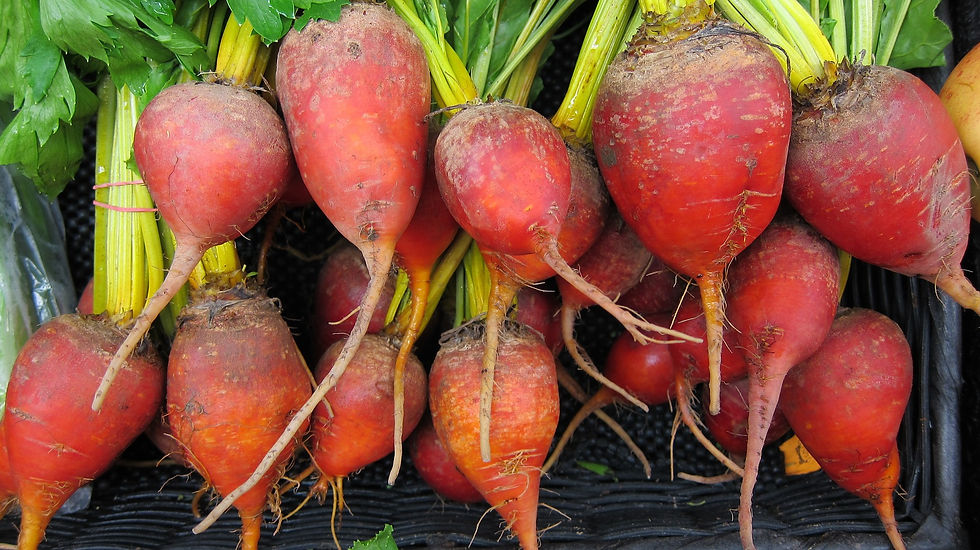
Golden- This type of beet doesn’t bleed and are the color of a carrot. The greens are delicious and you get the same great taste of the beets without the mess.
Lutz Green Leaf- This is a large variety of beet, which usually grows up to four times the size of most beets. It's a very sweet beet, and can withstand a winter.
Early Wonder- This beet is a popular heirloom. This plant produces deep red roots and abundant greens. This is an early maturing variety of beet.
Sweetheart- This variety of beet had unusually beautiful foliage with leaves tinted emerald.
When to grow
Beets are a plant that you are able to start outdoors or indoors, whichever is your preference. Beets grow best in colder climates but are hardy plants. It’s best recommended that if you are starting your seeds indoors to start planting late February and transplant outdoors in April for a spring crop. If you are skipping the step of the indoor planting, you can plant directly in the soil in late March to get a spring crop by early July. For the late summer/early fall planting you can start outdoors late August.
These are just general guidelines for planting. Here is a link to get more specific planting times for your area. Planting Calendar
Growing from seeds
Like I said above. Beets can be started indoors or directly in the soil. I personally just plant the seeds in the soil. For most varieties, plant seeds ½” deep and 2-3” apart. Beet seeds are actually a seedpod that contains several seed. So don’t plant too close. Beet seeds can take between 10-20 days to emerge from the soil due to their hard seed shell. Once they have emerged, most of the time they need to be thinned out so they are not too close together.

If starting your seedlings inside you will plant in a starting container and plant them in composted soil or organic soil ½” deep. Again, once they emerge from the soil you might have to thin them, due to their seeds being a seedpod, which contains several seeds. When transplanting outdoors, wait until plants are hardy enough to be transplanted (roughly 4-6 weeks). When you are ready to transplant outdoors, make sure to slowly introduce them to the sun otherwise your plants will get sunburned. You will want to slowly introduce them over a 2-3 week period (a maximum of an hour a day). Then you are able to transplant to your garden or to your containers.
**HELPFUL HINT: BEFORE PLANTING BEET SEEDS THEY BENEFIT FROM SOAKING DIRECTLY IN WATER FOR 4-6 HOURS TO HELP SOFTEN THE SEEDS. ** Especially when planting in climates that have low moisture and rainfall, it is recommended to soak the seeds for 24 hours.
Water, Feed, Placement
Beets are a hardy vegetable to grow. They can grow in either full sun or partial shade. Beets are a cool weather plant and will do well even when it frosts. When you plant your seedlings you will want to keep the soil evenly moist until the seeds sprout. Be careful not to overwater your plants because the seeds will rot. Water stress during the first 6 weeks can lead to premature flowering and low yields. When the plant begins to grow (10-20 days), you will want to let the soil dry slightly between waterings. When you water make sure you are watering deeply and regularly, especially during dry periods.

The nice thing about beets is that it’s such a hardy plant and if you are watering regularly there is no need for feeding your plant. Once the plant is established you can just let it grow and get the benefits in 6-8 weeks. All you need to do is mulch the area and water well.
Pest/Diseases
Beets usually have minimal disease and pest problems. This is one of the reasons why they are easy to grow. Some of the common beet plant pest/diseases include:
Bacterial blight- Small round spots on roots that enlarge, turn brown and rupture the leaf; raised corky spots on root surface that are gray, white or tan in color. You will have to treat your soil if blight is found. How to treat Early Blight
Beet curly top disease- infected leaves become a dwarf, crinkle and rolled upward and inward
Cercospora leaf spot- Brown to grey flecks or spots by red-purple halos on leaves.
Damping off- This happens when you have seedlings. You will notice the seedling collapsing and blackening. This can be prevented by avoiding overwatering.
Downy mildew- You will see a fuzzy gray growth on both sides of the greens.
Fusarium yellows and root rot- You will notice a yellowing on one side of the leaf. Later you will notice the greens becoming dry and brittle and look burnt.
Powdery mildew- you will notice a dusty white powder on one side of the leaves. If this progresses, it will be white powder on both sides of the crop.
Beet cyst nematode- The symptoms may vary depending on stage affected. These nematodes will stunt your leaf growth and your older plants will become yellow and wilted.
Leafminers- You will spot these with white, winding trails on the leaves.
Most of these pests/disease can be treated with Neem Oil of Diatomaceous Earth.
Growing in Containers

Beets are another vegetable that is great for container gardening and doesn’t require much space. When choosing your pot you want to choose a pot with SUFFICIENT drainage holes. Pots that are 10-12” deep at ideal for planting beets. Window boxes or large rectangular containers with the appropriate amount of depth are recommended for beet planting.
Some of the best varieties that grow well in containers would include: Detroit Dark Red, Early Wonder, Sangria, and Sweetheart (See above varieties)
When picking the soil of growing beets you will have to use soil that promotes the development of large roots. Make sure your soil is rich is nutrients, you can also add composted soil. Avoid adding pebbles or stones in your soil for drainage. This is a root vegetable.
When planting your beets in containers you will want to maintain 3” of distance between each plant from all directions.
Harvesting & Storage
When harvesting your beets yo can pick the greens when they are 5” tall. Harvest the beetroot when they are around 2-3” in diameter.

Store freshly harvested beets along with their greens loosely wrapped in the refrigerator crisper draw for about a week. To keep greens fresh, store cut ends down in a jar of water in the refrigerator. Use in about a week.
Do you enjoy beets? Are you growing them? I’d love to hear from you.


Comments